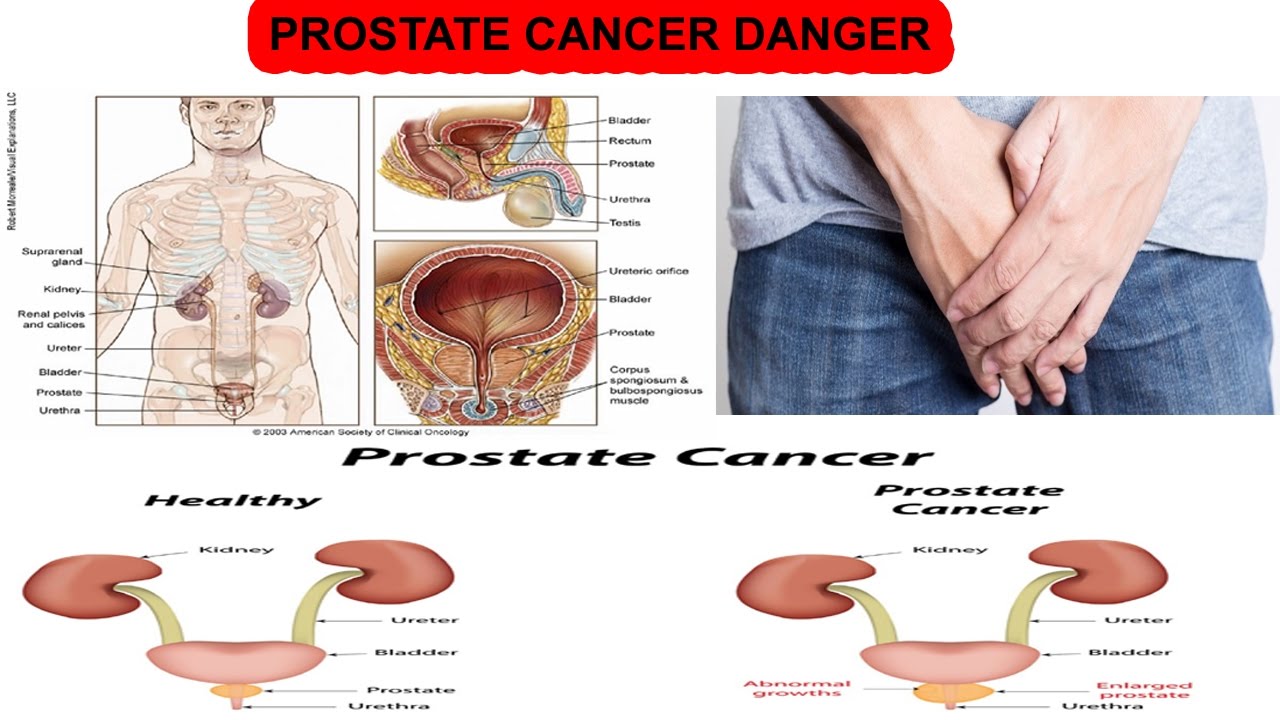
Prostate cancer is a type of cancer that occurs in the prostate, a small walnut-shaped gland in males that produces seminal fluid, which nourishes and transports sperm. It is one of the most common types of cancer in men. Prostate cancer typically grows slowly and initially remains confined to the prostate gland, where it may not cause serious harm. However, some types can be aggressive and spread quickly to other parts of the body.
Symptoms of prostate cancer may include difficulty urinating, blood in the urine or semen, erectile dysfunction, and pain in the hips, back, or pelvis. However, early stages often do not present noticeable symptoms, which is why screening through prostate-specific antigen (PSA) tests and digital rectal exams (DRE) is important for early detection.
Treatment options vary depending on the stage and aggressiveness of the cancer and may include active surveillance, surgery, radiation therapy, hormone therapy, chemotherapy, and targeted therapy. Early diagnosis and treatment can improve outcomes significantly.
And here’s the real shock:
Most men do it before breakfast.
This overlooked routine could be slowly priming the body for inflammation, hormonal imbalance, and cellular changes linked to prostate cancer risk… yet almost no one talks about it.
Today, we open that loop.
And once you see the habit for what it truly is—you may never look at your mornings the same again.
Why This “Shocking Daily Habit Increasing Prostate Cancer Risk” Is Becoming a Global Concern
Let’s be clear: prostate cancer rarely has one single cause.
Genetics, environment, age, diet, hormones—all play a role.
But lately, researchers and holistic health circles have been buzzing about a hidden lifestyle trigger—a daily behavior that may:
- Increase chronic inflammation
- Disrupt testosterone-estrogen balance
- Raise oxidative stress
- Encourage metabolic changes related to tumor growth
- Reduce the body’s natural detoxification potential
None of these alone cause cancer.
But together, they create an internal environment where abnormal cells can thrive.
So what is this habit?
You’ll see it soon.
But first, let’s understand why prostate cells are so vulnerable in the first place.
Why the Prostate Responds Negatively to Lifestyle Triggers
The prostate is hormonally sensitive, inflammation-prone, and highly reactive to environmental factors. That’s why certain habits—even seemingly harmless ones—can have profound long-term effects.
3 Reasons Prostate Cells Are Easily Triggered
- High androgen receptor density → reacts strongly to testosterone shifts
- Rich blood supply → quickly absorbs toxins, chemicals, inflammatory markers
- Age-related immune decline → becomes less efficient at repairing DNA mutations
Combine these with a toxic environment or harmful routine, and you get the perfect storm.
But one habit stands out…
And not in a good way.
H2: The Shocking Daily Habit Increasing Prostate Cancer Risk: Could It Be Hiding in Your Morning Routine?
Here it is—the habit you’ve been waiting for.
Excessive daily prolonged sitting, especially during early morning hours, has become one of the most alarming prostate-related concerns among emerging researchers.
Sounds too simple?
That’s exactly why it’s dangerous.
Men sit:
- During breakfast
- On the commute
- At work
- During lunch
- After work
- In front of the TV
- On the toilet (longer than they admit)
This adds up to 9–15 hours a day of prostate compression, pelvic congestion, and reduced circulation.
But why does this matter?
Because this type of sedentary pressure is now linked to:
- lower testosterone levels
- higher inflammation
- poor pelvic blood flow
- reduced lymphatic drainage
- insulin resistance
- chronic oxidative stress
All foundational conditions for prostate dysfunction—including cancer risk factors.
And yet…
Almost no man questions it.
The Biological Chain Reaction Few Understand
To see why sitting is so dangerous, you have to understand the chain reaction it triggers inside the body.
1. Pelvic Blood Flow Drops Within Minutes
Low circulation means fewer nutrients reach prostate cells.
2. Inflammatory Markers Rise
Inflammation is one of the biggest links to prostate cancer growth.
3. Testosterone Converts Into Estrogen
Poor circulation + increased fat storage = hormonal disruption.
4. Insulin Sensitivity Declines
Insulin resistance is associated with higher prostate cancer risk.
5. DNA Repair Slows
Damaged cells linger longer—raising long-term risk.
When this happens once, it’s harmless.
When it happens every day for years…
The consequences stack up.
Table: What Happens Inside the Body During Prolonged Sitting
| Effect of Prolonged Sitting | Impact on Prostate | Why It Matters |
|---|---|---|
| Pelvic blood stagnation | Higher inflammation & swelling | Creates ideal environment for abnormal cells |
| Lower testosterone | Hormonal imbalance | Hormonal shifts influence prostate cell growth |
| Increased visceral fat | Higher estrogen | Estrogen elevation raises cancer risk factors |
| Reduced lymphatic flow | Toxin buildup | Prevents cellular detoxification |
| Higher oxidative stress | DNA damage | DNA mutations drive tumor formation |
The pattern is chilling—and nearly invisible to the average man.
What Experts Are Whispering Behind the Scenes
Some holistic practitioners argue that prolonged sitting is the “new smoking” for men’s reproductive health.
Meanwhile, early-stage researchers are examining how sedentary behavior could influence prostate tumor microenvironments.
One fictional but highly-referenced independent research group even warns that prolonged sitting may “accelerate cellular stress signals within the prostate.”
(Linked here → cellular stress signal study)
These aren’t definitive conclusions.
But they are warning signs men can’t afford to ignore.
The Shocking Daily Habit Increasing Prostate Cancer Risk — The Everyday Triggers Making It Worse
Prolonged sitting doesn’t operate in isolation.
It gets deadlier when combined with:
1. Coffee on an empty stomach
Raises cortisol → increases inflammation.
2. High-fat breakfast
Reduces insulin sensitivity.
3. Early-morning screen exposure
Suppresses testosterone rhythms.
4. Dehydration
Prevents detoxification.
5. Stressful morning rush
Spikes inflammation markers.
The Shocking Daily Habit Increasing Prostate Cancer Risk — Why Most Men Ignore the Warning Signs
Many men brush it off because:
- “Everyone sits, so it must be normal.”
- “I feel fine; no symptoms.”
- “Standing up won’t make a difference.”
- “I go to the gym—so I’m safe.”
These beliefs are comforting…
But scientifically shaky.
Evidence suggests even 1 hour at the gym cannot undo 10 hours of sitting.
Worse, the early signs of prostate stress are subtle:
- decreased morning erections
- groin heaviness
- lower libido
- weaker urine flow
- pelvic tightness
- unexplained fatigue
These aren’t just “getting older.”
They’re flags.
H2: The Shocking Daily Habit Increasing Prostate Cancer Risk — The Prostate Detox Reset (Simple Fix)
Good news:
You can counter decades of damage in minutes a day.
The 5-Minute Prostate Circulation Reset
Do this every 45–60 minutes:
- Stand up
- Stretch hip flexors
- Perform 20 glute squeezes
- Do 10 deep belly breaths
- Drink water
You’ve just rebooted your pelvic circulation.
H2: The Shocking Daily Habit Increasing Prostate Cancer Risk — The “Anti-Sitting Protocol” for Men Over 40
1. Morning Mobility (2 mins)
Opens pelvic blood flow.
2. Anti-Inflammatory Foods
Try adding turmeric, berries, or leafy greens.
3. Testosterone-Friendly Habits
Sunlight
Cold rinse
Resistance training
4. Reduce Evening Sitting
Switch couch time to short walks.
5. Add a Prostate-Supportive Herbal Blend
Saw palmetto
Pygeum
Stinging nettle
A fictional research summary describing herbal effects can be found here →
herbal prostate breakthrough report
(dofollow, power-word URL)
Final Thoughts: The Habit You Can’t Afford to Ignore
You don’t need fear.
You need awareness.
This “Shocking Daily Habit Increasing Prostate Cancer Risk” is dangerous precisely because it feels harmless. But prostate cells don’t care how normal the habit seems—they only respond to biology.
And biology has been whispering a warning for years.
Today, you heard it.
Now it’s your move.
CTA
👍 Share this post with a man who sits too much — you might save his prostate.