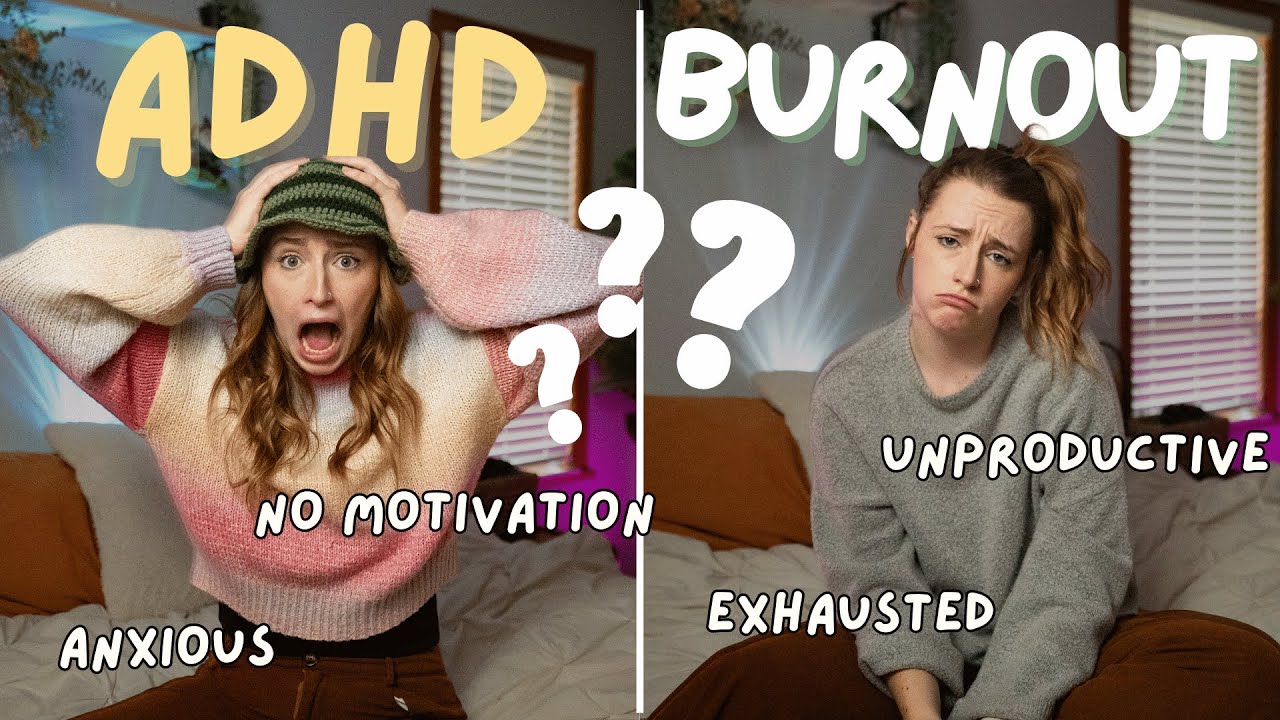
ADHD burnout is a hidden struggle that many individuals with ADHD face but few talk about. It goes beyond everyday fatigue, leaving you feeling overwhelmed, exhausted, and unable to function at your best. If you’ve been battling constant mental fog, emotional exhaustion, and a sense of defeat, there is hope. the shocking recovery secret that can help you reclaim your energy, focus, and joy. Say goodbye to burnout and hello to a refreshed, empowered you.
You’re not lazy. You’re not broken. And you’re definitely not “just bad at managing time.”
If you live with ADHD and feel mentally drained, emotionally numb, and unable to function like you used to — you may be facing something most people (and even some clinicians) miss: .
ADHD burnout is real — and the recovery method experts rarely explain properly might surprise you.
Let’s break it down clearly, practically, and honestly.
What Is ADHD Burnout — And Why ADHD Burnout Gets Misunderstood
ADHD burnout is a state of deep mental, emotional, and cognitive exhaustion caused by prolonged effort to function in systems not designed for ADHD brains.
Unlike ordinary stress, ADHD burnout is not just “too much work.” It is:
- Chronic executive function overload
- Emotional regulation fatigue
- Constant masking and self-monitoring
- Repeated failure–shame cycles
- Overcompensation followed by collapse
Many adults with ADHD push themselves using urgency, fear, and pressure as fuel. That works — until it suddenly doesn’t.
According to clinical guidance summarized in this power guide to ADHD emotional regulation:
https://chadd.org/for-adults/emotional-regulation-adhd-power-guide
Emotional strain and cognitive overload are core contributors to ADHD functional shutdown — not character weakness.
That distinction matters.
Burnout Symptoms Most People Don’t Recognize
symptoms often get mislabeled as depression, laziness, or loss of motivation.
But the pattern is different.
Common Symptoms
- Sudden drop in productivity after long overperformance
- Mental paralysis when facing simple tasks
- Extreme decision fatigue
- Irritability and emotional volatility
- Sensory overload intolerance
- Avoidance of responsibilities you previously handled
- Brain fog and slow processing
- Loss of interest in goals that once mattered
- Sleep disruption
- “I just can’t start” feeling — even with urgency
The key marker: you want to function — but your cognitive engine won’t turn over.
ADHD Burnout vs Depression vs Stress — Quick Comparison
| Feature | ADHD Burnout | Depression | General Stress |
|---|---|---|---|
| Motivation | Present but blocked | Reduced or absent | Present |
| Emotional tone | Frustrated, overwhelmed | Hopeless, low mood | Tense |
| Task start ability | Severely impaired | Low energy | Possible |
| Interest in goals | Still there | Often gone | Still there |
| Trigger | Chronic ADHD strain | Multifactorial | Situational |
| Recovery path | Nervous system reset | Mood treatment | Rest & coping |
This is why many adults with ADHD get the wrong label — and the wrong recovery advice.
Why ADHD Burnout Happens More in High-Functioning Adults
Ironically, high-achieving ADHD adults are more vulnerable to ADHD burnout.
Why?
Because they survive using unsustainable coping strategies:
- Deadline panic
- Perfectionism
- People-pleasing
- Hyperfocus sprints
- Sleep sacrifice
- Self-criticism as motivation
- Overcommitting to prove worth
These strategies produce results — short term.
But neurologically, they drain executive resources and emotional regulation capacity.
Eventually, the system crashes.
The Hidden Cycle No One Explains
Most articles say “rest more.” That’s incomplete.
follows a specific neurological cycle:
- Overcompensation phase
- Hyperfocus productivity bursts
- Stress hormone dependency
- Emotional regulation fatigue
- Executive dysfunction spike
- Task avoidance
- Shame spiral
- Shutdown
Unless the cycle is interrupted, burnout repeats.
ADHD Burnout Is Not Fixed by Motivation — It’s Fixed by Regulation
Here’s the part many experts don’t emphasize enough:
recovery is not motivation-based — it is regulation-based.
Trying to “push through” makes it worse.
The ADHD brain under burnout needs:
- Nervous system regulation
- Cognitive load reduction
- Executive function scaffolding
- Emotional safety
- Stimulation balance — not stimulation elimination
Research-backed ADHD clinical resources such as this expert recovery resource highlight regulation and structure — not willpower — as the reset path:
Recovery — The Method Experts Rarely Spell Out Clearly
Let’s make this practical.
The ADHD burnout recovery method has five phases.
Most people only hear about one: “rest.”
That’s not enough.
Phase 1 — Recovery Starts With Cognitive Load Removal
You must reduce executive demand immediately.
Not forever — temporarily.
Remove or pause:
- Non-urgent commitments
- Optional projects
- Excess decisions
- Social obligations that drain you
- Complex planning tasks
This is not failure.
It is neurological triage.
Phase 2 — Recovery Requires Decision Simplification
Decision fatigue accelerates ADHD burnout.
Create temporary rules:
- Fixed meals
- Fixed wake time window
- Fixed work blocks
- Pre-selected clothing sets
- Repeatable routines
Less decision load = faster executive recovery.
Phase 3 — Recovery Needs Dopamine Stabilization
ADHD brains rely heavily on dopamine regulation.
Burnout often follows dopamine crash patterns.
Stabilize dopamine with:
- Short movement bursts
- Natural light exposure
- Protein-rich meals
- Novelty in small doses
- Music stimulation
- Body doubling
- Timed task sprints (10–20 min)
Avoid extremes:
- All-day scrolling
- Total isolation
- All-or-nothing productivity pushes
Balance beats intensity.
Phase 4 — Recovery Requires Task Re-Entry — Slowly
Do not return at full speed.
Use graded re-entry:
- 1 small task
- Then stop
- Reward
- Repeat later
Use the 3-step re-entry rule:
- Micro-task
- Visible completion
- Immediate break
Momentum — not volume — restores function.
Phase 5 — Recovery Depends on Emotional Reset
ADHD burnout is not just cognitive — it’s emotional.
Long masking creates emotional exhaustion.
Emotional reset tools:
- Safe venting conversations
- Journaling without structure
- Therapy or ADHD coaching
- Self-compassion scripts
- Removing shame language
Replace:
“I’m behind” → “My system is overloaded.”
“I’m failing” → “I’m recovering capacity.”
Language changes physiology.
ADHD Burnout Warning Signs You Should Never Ignore
Watch for early signals of ADHD burnout:
- Rising irritability
- Increased procrastination
- Sensory sensitivity
- Task dread
- Sleep-wake disruption
- Emotional numbness
- Avoiding messages and emails
- Missing easy deadlines
Early response prevents full shutdown.
The High-Risk Environment
Workplaces often trigger ADHD burnout due to:
- Context switching
- Interruptions
- Ambiguous priorities
- Long planning tasks
- Meeting overload
- Performance masking
Protective strategies:
- Written priorities only
- Meeting limits
- Task batching
- Body doubling sessions
- Visual task boards
- External deadlines
Structure reduces cognitive strain.
ADHD Burnout and Relationships — The Silent Impact
ADHD burnout often appears as:
- Withdrawal
- Short temper
- Missed commitments
- Communication delays
- Emotional shutdown
Partners may misread this as indifference.
Explain the mechanism — not just the behavior.
Recovery Timeline — What to Expect
Realistic ADHD burnout recovery is not instant.
| Stage | What Happens |
|---|---|
| Week 1 | Cognitive load reduction |
| Week 2 | Emotional decompression |
| Week 3 | Energy variability |
| Week 4 | Task re-entry |
| Week 5–6 | Executive function rebound |
Recovery is uneven — that’s normal.
Prevention — The Long-Term Strategy
Once recovered, prevention matters more than rescue.
ADHD burnout prevention rules:
- Never rely only on urgency
- Build low-friction systems
- Schedule recovery days
- Use external structure
- Protect sleep aggressively
- Limit overcommitment
- Track cognitive load — not just time
Burnout is load-driven, not time-driven.
Myths That Keep People Stuck
I just need more discipline
Truth: You need better regulation
Myth: Rest alone fixes ADHD burnout
Truth: Structure + regulation fixes it
Myth: If I slow down, I’ll fall behind
Truth: If you don’t slow down, you’ll shut down
Final Thoughts — ADHD Burnout Is Real, Reversible, and Preventable
ADHD burnout is not weakness. It is neurological overload.
The recovery method experts rarely explain clearly is this:
Reduce load → regulate system → rebuild capacity — in that order.
motivation.
pressure.
Not guilt.
If this article described what you’re experiencing, don’t ignore it.
Your brain isn’t broken.
It’s overloaded — and it can recover.
CTA
If this helped you understand ADHD burnout, Share Now, Read More, and pass it to someone silently struggling.