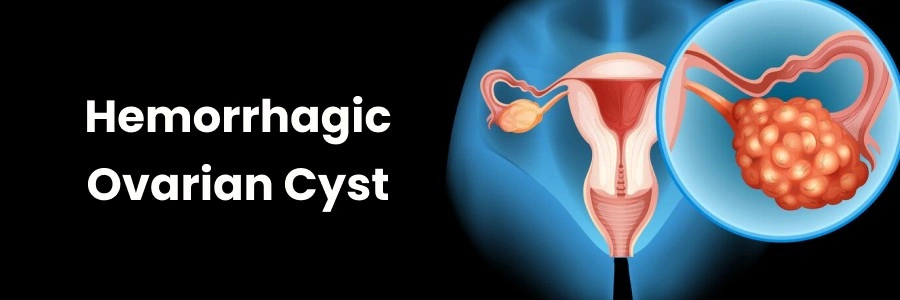
Hemorrhagic ovarian cyst are a common yet often misunderstood condition that can cause sudden and severe discomfort. Many women experience these cysts without realizing the potential risks involved, leading to delayed diagnosis and treatment. Recognizing the early warning signs is crucial, as missing them can result in complications that might require urgent medical attention. the scary signs of hemorrhagic ovarian cysts that most women overlook, helping you stay informed and proactive about your health.
You feel a sudden sharp pain in your lower abdomen.
At first, you think it’s just period cramps. Then it gets worse.
Hours later, you’re doubled over, wondering if something inside you just burst.
For many women, this is how a hemorrhagic ovarian cyst is discovered — suddenly, painfully, and unexpectedly.
Let’s talk about what it really is, why it happens, and how to know when it becomes dangerous.
What Is a Hemorrhagic Ovarian Cyst?
A hemorrhagic ovarian cyst is a functional cyst that bleeds internally.
During a normal menstrual cycle, follicles form on the ovary. One releases an egg. Occasionally, instead of shrinking, that follicle fills with blood.
That’s what creates a bleeding ovarian cyst.
According to the powerful ovarian cyst explanation by ACOG, most functional cysts are harmless. A hemorrhagic cyst is a subtype that contains blood due to vessel rupture inside the cyst wall.
It sounds frightening — but most resolve on their own.
The problem? Some don’t.ACOG – Ovarian Cysts (Women’s Health Guide)
https://www.acog.org/womens-health/faqs/ovarian-cysts
Hemorrhagic Ovarian Cyst Symptoms Most Women Overlook
Many women mistake symptoms for:
- Severe PMS
- Regular period cramps
- Gas pain
- Muscle strain
Common Hemorrhagic Ovarian Cyst Symptoms
- Sudden, sharp pelvic pain (usually one-sided)
- Dull aching in lower abdomen
- Bloating
- Nausea
- Pain during intercourse
- Delayed or irregular periods
The pain often starts mid-cycle — around ovulation.
That timing matters.
Because this type of cyst forms from ovulation-related structures, symptoms often appear between menstrual cycles.
Hemorrhagic Ovarian Cyst Rupture: When It Becomes an Emergency
Here’s where fear becomes justified.
A hemorrhagic ovarian cyst rupture occurs when the cyst wall breaks and releases blood into the abdominal cavity.
Symptoms of rupture include:
- Sudden severe abdominal pain
- Shoulder pain (from internal bleeding irritation)
- Dizziness
- Weakness
- Fainting
- Rapid heartbeat
Internal bleeding can irritate surrounding tissues and cause intense pain.
While many ruptures resolve without surgery, significant bleeding requires immediate medical attention.
The shocking ovarian cyst complication details from Mayo Clinic explain that severe pain, fever, or signs of shock demand emergency care.
Trust your body. Sudden severe pain is not “just cramps.”
Hemorrhagic Ovarian Cyst vs Other Ovarian Cysts
Not all cysts are created equal.
Here’s a comparison to clarify confusion:
| Type of Cyst | Contains | Pain Level | Risk of Rupture | Cancer Risk |
|---|---|---|---|---|
| Functional Cyst | Fluid | Mild | Low | Very Low |
| Hemorrhagic Ovarian Cyst | Blood | Moderate–Severe | Moderate | Low |
| Endometrioma | Thick old blood | Chronic pain | Low | Low |
| Dermoid | Tissue (hair/fat) | Mild | Rare | Rare |
Hemorrhagic ovarian cysts stand out because bleeding increases internal pressure — which increases pain.
Why Do Hemorrhagic Ovarian Cysts Happen?
Several factors increase risk:
- Ovulation irregularities
- Hormonal imbalance
- Blood clotting disorders
- Fertility medications
- PCOS
Birth control pills reduce ovulation frequency — which lowers the risk of hemorrhagic cyst formation.
Women not using hormonal contraception may experience them more often.
How Is a Hemorrhagic Ovarian Cyst Diagnosed?
Diagnosis typically involves:
- Pelvic exam
- Transvaginal ultrasound
- Blood tests (if rupture suspected)
On ultrasound, hemorrhagic cysts often show a “lace-like” or web-like internal pattern due to clotted blood.
Doctors may monitor the cyst over several weeks to ensure it shrinks naturally.
Hemorrhagic Ovarian Cyst Treatment Options
Treatment depends on:
- Size
- Symptoms
- Stability of vital signs
- Amount of internal bleeding
Conservative (Non-Surgical) Management
Most cases involve:
- Pain medication
- Rest
- Monitoring with repeat ultrasound
Cysts usually resolve within 6–8 weeks.
Surgical Treatment
Required when:
- Severe bleeding occurs
- Hemodynamic instability develops
- Torsion is suspected
- Cyst persists or grows
Surgery may involve:
- Laparoscopic cyst removal
- Rarely, ovary removal if severely damaged
Prompt care preserves fertility in most cases.
Can a Hemorrhagic Ovarian Cyst Affect Fertility?
This is the question many women silently fear.
The reassuring truth:
Most hemorrhagic ovarian cysts do NOT affect long-term fertility.
Because they originate from normal ovulation structures, they typically resolve without damaging ovarian tissue.
Fertility risk increases only if:
- Repeated ruptures cause scarring
- Ovarian torsion occurs
- Surgical removal damages healthy tissue
Even then, one healthy ovary is often enough for conception.
Warning Signs You Should Never Ignore
Seek urgent medical attention if you experience:
- Severe, sudden pelvic pain
- Fainting
- Cold sweats
- Rapid breathing
- Severe abdominal swelling
These could indicate internal bleeding.
Delaying care can worsen outcomes.
Can Hemorrhagic Ovarian Cysts Be Prevented?
Complete prevention isn’t always possible.
But risk can be reduced by:
- Hormonal birth control (if appropriate)
- Regular gynecologic checkups
- Managing PCOS
- Tracking ovulation patterns
Lifestyle changes that support hormonal balance include:
- Stable blood sugar
- Anti-inflammatory diet
- Stress management
- Regular exercise
While these steps don’t guarantee prevention, they reduce recurrence risk.
The Emotional Impact of a Hemorrhagic Ovarian Cyst
Sudden pelvic pain is frightening.
Women often describe:
- Panic
- Fear of cancer
- Anxiety about fertility
- Embarrassment discussing symptoms
Reproductive health issues carry emotional weight.
But here’s something important:
A hemorrhagic ovarian cyst is common.
It is usually benign.
And most women recover fully.
Hemorrhagic Ovarian Cyst Recovery Timeline
If no rupture complications occur:
- Pain improves within days
- Internal bleeding reabsorbs over weeks
- Follow-up ultrasound confirms resolution
Your body is remarkably efficient at healing.
Myths About Hemorrhagic Ovarian Cysts
Let’s clear the confusion.
always requires surgery
Most resolve naturally
It means you have cancer
Cancer risk is very low
It will ruin fertility
Fertility usually remains intact
happens because you did something wrong
a biological event tied to ovulation
Knowledge replaces fear.
Key Takeaways About Hemorrhagic Ovarian Cysts
- A hemorrhagic ovarian cyst contains blood due to internal vessel rupture.
- Sudden sharp pelvic pain is the most common symptom.
- Rupture can be painful but is often self-limiting.
- Emergency care is necessary if severe bleeding occurs.
- Most cysts resolve within 1–2 months.
- Fertility is typically unaffected.
Final Thoughts: Fear vs Facts
“Hemorrhagic” sounds terrifying.
But the majority of these cysts are manageable and temporary.
The real danger lies not in the diagnosis — but in ignoring severe symptoms.
If pain is intense or unusual, seek care.
mild, monitor responsibly.
If worried, ask questions.
Your body communicates clearly when something needs attention.
Listen to it.
Call to Action
If this guide helped you understand hemorrhagic ovarian cyst symptoms and risks:
- Share Now with someone who might dismiss pelvic pain.